To solidify your brand's identity, experience, and success you need a design system.
Growing your brand will inevitably involve the challenge of maintaining a consistent brand image and message while also ensuring seamless user experiences across multiple platforms, regions, and languages.
Time to consider building an Enterprise Design System (EDS).
A centralized, scalable framework for streamlining design efforts, creating an EDS involves a significant effort of coordination, alignment, and communication across multiple departments and stakeholders who are (more often than not) spread across multiple different locations and time zones.
It seems difficult. It doesn’t have to be.
Begin by establishing a shared brand vision statement for your design system that will function as a constitutional binding thread throughout the design and development process. Your vision statement has to clearly communicate the purpose and goal of your EDS, align to your brand’s core mission, and be approved by all stakeholders and teams involved.
The roles, responsibilities, tasks, workflows, communication channels, and success metrics involved in the process need to be defined, understood, and followed in order to successfully build, implement, and sustain an EDS from pre-launch to launch to post-launch optimization.
And, of course, all of these requirements and processes have to be evaluated, prioritized, and balanced alongside other organizational and product timelines.
Know how to role
If you bring in design and development talent, work with an agency, or opt to build your design system in-house, it is critical to know the team roles that need to be filled, each of their responsibilities, and every team member’s unique contributions in achieving your design system’s shared vision and goal.
Design System Team
The core group responsible for crafting and maintaining the EDS, including:
Design System Lead
Creative Director and Engineering Lead
Oversees the decision-making and direction of the entire EDS initiative.
Designers and Developers
UX and UI designers and engineers
Communicate and collaborate on the design and programming requirements of creating and updating components.
Content Strategists and Creators
Content Strategists and Copy Directors
Build and ensure consistency in written content and messaging across all digital platforms and social and marketing channels.
Stakeholders
Individuals and team members within a company or organization that have a vested interest in the EDS's creation, maintenance, and success, including:
C-suite stakeholders
Provide top-level input to help inform requirements and how the EDS aligns with product, marketing, and development roadmaps.
CMO, COO, CTO, etc.
Brand marketers
Ensure brand consistency throughout EDS creation process and deployment strategy across marketing materials and channels.
Marketing director, manager, etc.
IT Support
Give context for design and development decisions within the larger framework of an organization’s code base, libraries, data management, and reporting systems.
Internal IT/development team
Governance Team
Define the policies and guidelines to ensure the EDS remains coherent, efficient, and aligned to success metrics.
Product manager, brand director, etc.
Follow the process & flow with it
Great, your teams are aligned!
Now the plan for building an EDS has to be defined, aligned, and followed, ensuring that every stakeholder and team member understands where, how, when, and why their role is necessary. This coordination requires clear, thorough communication internally between stakeholders within your organization and externally with any additional resources or agencies contributing to the process.
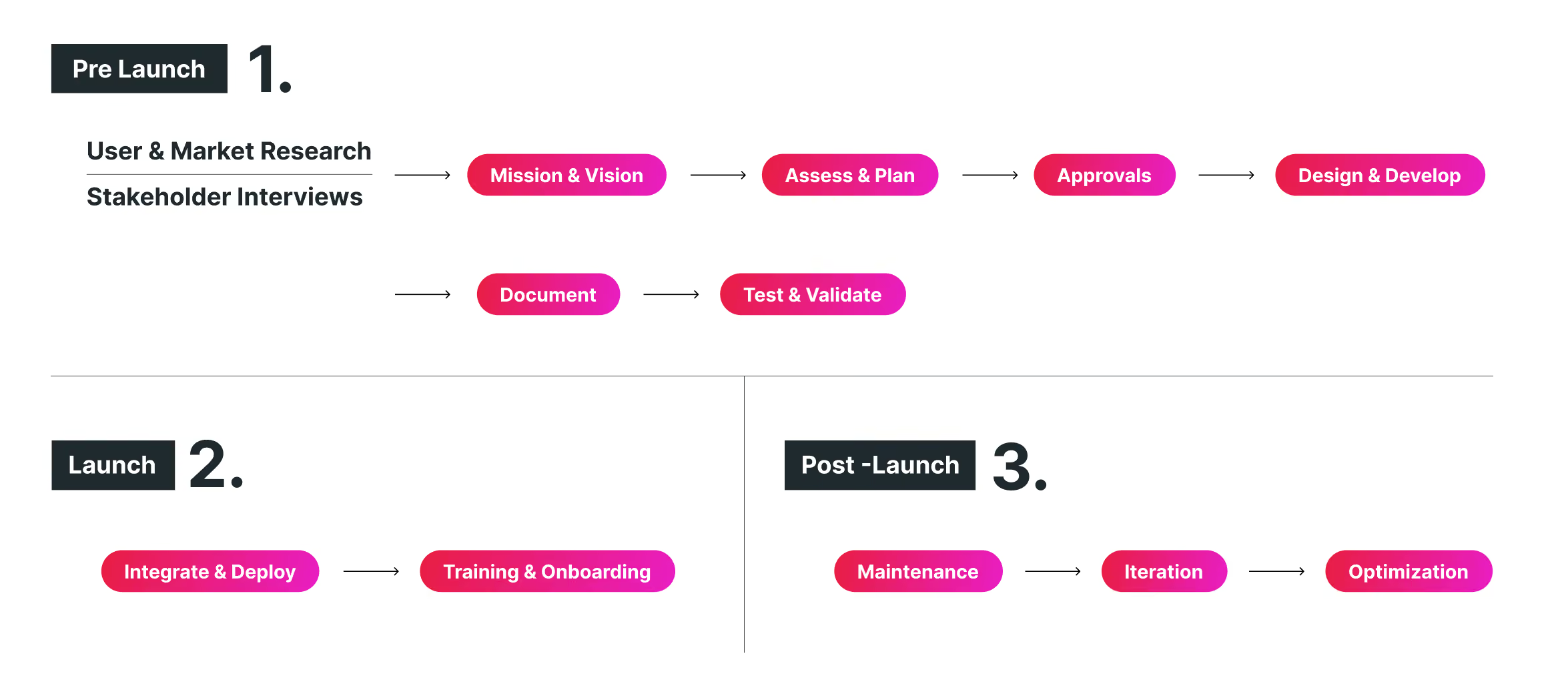
User & Market Research and Stakeholder Interviews
Understand your market position.
Know what your brand needs to be successful.
Know the people who will be interacting with your design system externally as well as the people who invested in the creation and maintenance of your design system internally.
Mission/Vision Statement
Establish a shared, aligned statement that clearly states the core objective of the EDS that all stakeholders and team members agree upon.
Assessment and Planning
Take an inventory of any and all existing design elements in your brand in order to define a comprehensive plan and scope for your EDS.
Research and evaluate existing design systems that align to your brand needs to leverage as a foundational template for your design system.
Designate clear approval structures so all team members and stakeholders understand sign off, assignments, and next steps through every stage of design, development, and implementation.
Design and Development
Implement a consistent design system vocabulary that facilitates clear communication between design and development teams.
Create and refine scalable design components including typography, color schemes, UI patterns, and code libraries to ensure they meet design standards and can function efficiently across various platforms.
Documentation
Include code snippets, prototypes, best practices, and visual examples.
Testing and Validation
Rigorously test the components in different scenarios and with different user groups to identify and resolve any outstanding issues.
Integration and Deployment
Recommend a phased approach that allows for low-risk iterations and testing.
Training and Onboarding
Educate stakeholders and teams (as necessary) on how to effectively use the EDS and communicate its value across departments, product and marketing channels, and other brand experiences.
Maintenance and Iteration
Continuously monitor and update your EDS to accommodate and adapt with evolving design trends, technology changes, and user needs.
Optimization
Commit to revisiting and updating your design system as needed to ensure your brand’s relevance and impact in the market.
Define Success & How to Achieve It
A shared understanding of what your success metrics are is as critical to an EDS as a shared mission and vision of your objective. Both serve as guideposts that your teams can look to from kickoff to launch of the EDS project and beyond.
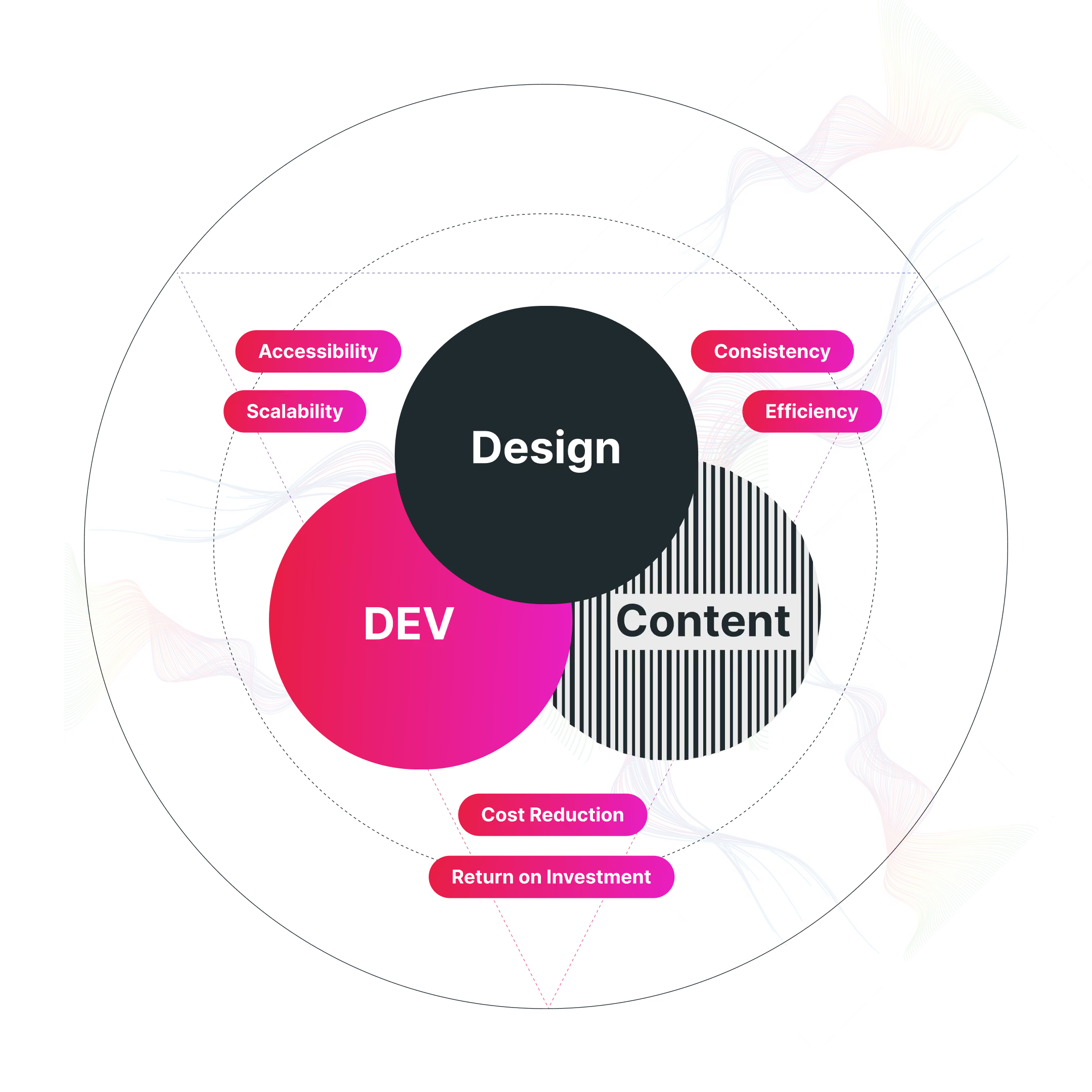
Consistency
The EDS has to include standards and systems that ensure design and messaging consistency across all brand touchpoints.
Measure these requirements through regular design audits and brand consistency scores.
Efficiency
Measure and evaluate the time and resources saved by incorporating and using the EDS compared to previous manual design processes.
User Satisfaction
Schedule regular initiatives to gather user feedback in order to gauge how successfully the EDS is enhancing user experiences and addressing pain points.
Accessibility
Assess how well your EDS aligns to accessibility standards on a routine basis and update as necessary.
Adoption Rates
Distribute surveys or conduct assessments to monitor how widely, consistently, and appropriately the EDS is being adopted across your product and/or marketing initiatives.
Return on Investment (ROI)
Calculate the impact of the EDS on design, development, and marketing efforts by assessing cost savings and revenue generation.
Error Reduction
Track and document the number of design and development errors reduced by using the EDS.
Scalability
Assess the EDS's ability to scale and adapt to new platforms, regions, and languages as the brand expands.
Communicate. Communicate. Communicate.
Ultimately, the most fundamental component of a successful Enterprise Design System (EDS) is communication. In order to incorporate input and feedback from multiple stakeholders and to guarantee alignment across design and development teams, make sure to set clear expectations around communication channels, key milestones, approvals, risks, and change requests from the beginning of the project. This effort up front will help to better facilitate optimal process adherence and workflows.
Even more, a shared design system vocabulary significantly reduces confusion between design and development, which increases the velocity of your brand, marketing, and product builds by decreasing miscommunications or misunderstandings in transition.
It's not rocket science (with the right partners & teams)
Yes, building an Enterprise Design System for a global brand can be a complex undertaking, but it reaps high rewards and dividends.
Global brands such as Apple, Microsoft, Airbnb, IBM, E*Trade, Salesforce, and more are prime examples of how an enterprise design system ensures brand consistency, saves time and resources, and elevates user experiences while also increasing brand recognition and loyalty.
With the right team united around a shared vision with clear roles and responsibilities, well-defined tasks, and a metrics-driven approach, an EDS will propel and sustain your brand's success at a global scale.
Related Posts
More from the team on what's shifting and what to do about it.