Energy Digital Experience: The New Operational Backbone for Energy
The energy and utilities sector is redefining customer engagement. What used to be bills and outage calls is now a continuous, data-driven relationship across sites, apps, and customer portals. Treat the digital experience as infrastructure: a unified stack that spans marketing, onboarding, an energy management platform, operations dashboards, and post-install support.
The energy and utilities sector is redefining customer engagement. What used to be bills and outage calls is now a continuous, data-driven relationship across sites, apps, and customer portals. Treat the digital experience as infrastructure: a unified stack that spans marketing, onboarding, an energy management platform, operations dashboards, and post-install support.
The strategic creation of a modern, user-centric digital experience is now a key differentiator, enabling energy companies to stay competitive and deliver greater value to their customers.
Done well, it turns complex data into real time insights, helps customers control energy usage, and gives teams the governance needed for resilient customer experience.
Why this matters now
Distributed energy resources are rising; digital technologies now tie the pieces together; customers expect visibility, control, and seamless integration with home, building, and grid devices.
Digital transformation is shifting the energy sector toward platforms that provide actionable insights, self-service, and automation. Across the energy industry, leaders pair design with governance to scale responsibly across the energy industry.
Electric utilities face growing demand and tighter margins; the path to operational efficiency runs through better design, data, and service. To maximize value, utilities must set clear digital transformation priorities, ensuring that limited resources are focused on the most impactful initiatives.
Energy industry trends shaping digital experience
The energy and utilities sector is experiencing a wave of transformation, powered by rapid advances in digital technologies and shifting market expectations. The integration of renewable energy sources—such as solar, wind, and battery storage—is fundamentally changing how energy is produced, distributed, and consumed. Smart grid technologies are enabling real time monitoring and control, making the grid more responsive and resilient. At the same time, machine learning and advanced data analytics are being used to optimize energy distribution, predict equipment failures, and personalize the customer experience.
The rise of electric vehicles and the deployment of large-scale energy storage systems are expected to further disrupt traditional models, creating new opportunities and challenges for operators. As these trends accelerate, energy companies must prioritize digital transformation to deliver seamless, data-driven experiences that meet the evolving needs of their customers. Staying ahead means investing in platforms and tools that can adapt to new technologies, support sustainability goals, and provide the flexibility required in a rapidly changing landscape.
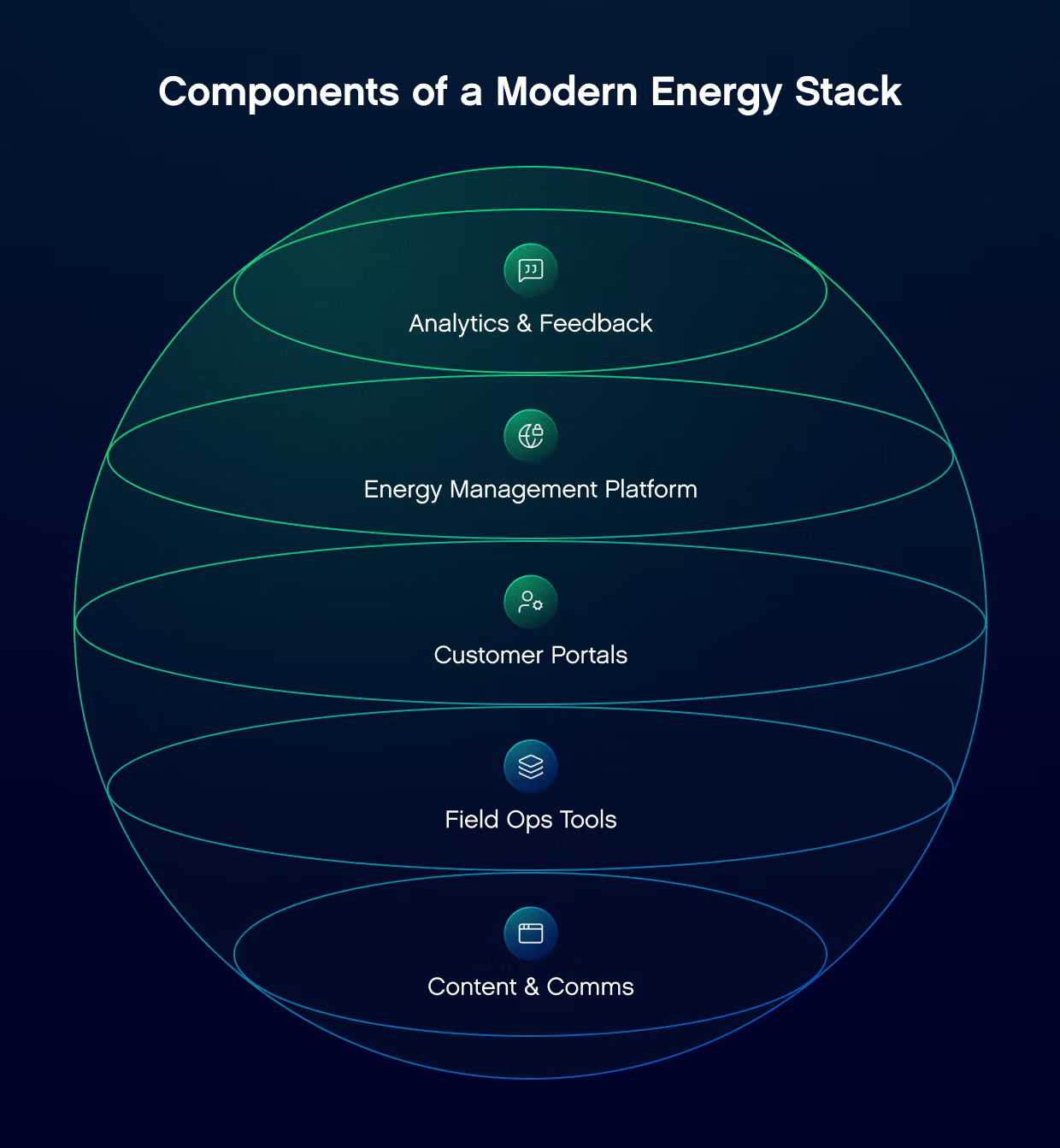
What the modern stack includes
Energy management platform for real time monitoring, demand response, emissions tracking, and alerts.
Customer portals with billing, usage visualizations, and support, designed to display usage data, reports, and notifications in a user-friendly way.
Field ops tools for inspections, asset management, and service.
Content & comms on headless CMS to inform and convert.
Analytics & feedback loops to improve decision making.
From web to workflow
A site alone can’t meet expectations. Customers want a new portal that unifies onboarding, usage, and support by connecting transformation initiatives, systems, and assets to enable a seamless digital experience. Behind the scenes, teams need an energy management platform that pulls telemetry, normalizes it across cloud infrastructure, and streams real time data to apps and portals. The goal: provide customers a portal experience that is trustworthy, fast, and simple—the critical role of UX in utilities.
Customer portals that people actually use
Customer portals should do more than show a PDF bill. Design for users to efficiently manage energy consumption, billing, and support:
Energy consumption clarity: now/today/month views, cost overlays, and tips to improve energy efficiency. Compare energy consumption year-over-year and against efficient peers.
Real time monitoring: production vs energy use with alerts to help users make informed decisions.
Programs & offers: demand response enrollment, rebates, and storage offers.
Support: guided troubleshooting, secure chat, and ticket history for users.
Deliver a consistent portal experience across web and mobile; launch a new portal with role-based access, audit trails, and localization to meet users' needs.
Energy management platform: the operational core
Digital twin technologies mirror assets and sites so operators can test changes before they hit production.
For utility sector and energy companies, the platform is the heart:
Normalizes diverse device data, preserves data quality, and exposes APIs.
Powers real time monitoring, automated adjustments, and demand response.
Surfaces actionable insights for facility managers and operators.
Tracks assets, maintenance windows, and regulatory compliance.
Feeds customer portals with reliable summaries of energy usage and costs.
This is also where asset management converges with customer experience and customer experience design principles: one source of truth for devices, work orders, and lifecycle events.
Integrations that feel invisible
Great experiences depend on seamless integration between operational technology and information technology, which relies on a robust network to support connectivity and efficient data flow between systems. Use hosted solutions to bridge distributed energy resources, IoT gateways, and billing. Pair cloud platforms like Microsoft’s cloud with vendor ecosystems—Schneider Electric, Honeywell Forge, and Siemens MindSphere—so data lands in one place and stays usable.
Real-time visibility and control
Give customers and teams real time insights, not stale reports. Stream real time data into dashboards; overlay pricing, weather, and alerts; and let customers act—adjust schedules, enroll in demand response, or contact support. For operators, the same telemetry supports grid reliability and faster restoration workflows that ultimately benefit customers.
Personalization with responsibility
Machine learning and AI have the potential to transform energy management, delivering greater efficiency and cost savings across the energy and utilities sector.
Use machine learning in the energy and utilities sector to cluster customer segments and recommend actions that improve energy efficiency. Use machine learning in QA to detect UI regressions. Limit algorithmic opacity; explain why a suggestion appears. AI belongs where it reduces friction—forecasting energy demand, helping predict equipment failures, and smoothing peaks in energy demand and routing service—not where it hides key choices.
Vendor ecosystems that scale
Energy companies benefit from proven, innovative suites across use cases. Schneider Electric platforms cover monitoring and control; Schneider Electric also provides building and industrial integrations that shorten delivery. Honeywell Forge offers enterprise performance tools; Siemens MindSphere supports industrial connectivity. These ecosystems accelerate delivery while keeping options open.
Security, privacy, and trust
Energy usage data is sensitive, and protecting it requires a robust security framework that ensures compliance and safeguards sensitive information.
Protect it with least-privilege roles, encryption, and immutable audit logs. Separate customer identity from device streams. Treat portals as critical systems; add step-up auth for payments and profile changes. Build runtime checks for data integrity and rate-limit public APIs.
Data & analytics without noise
You don’t need a thousand dashboards; you need answers. Start with Google Analytics for journeys, funnels, and content performance. Layer advanced analytics and digital tools to correlate energy consumption patterns with service tickets and program enrollments. Report what matters: adoption, savings, satisfaction, cost reduction, and time-to-resolution—so you can reduce costs without reducing service and save significantly on operational expenses and energy consumption by identifying and acting on efficiency opportunities.
Cloud that serves the product
Cloud services should be boring and resilient, built on Microsoft Azure or equivalent where it fits. Leveraging an open platform enables greater flexibility and seamless integration with other systems, supporting scalable and future-proof energy data management. Use cloud infrastructure for ingestion, processing, and APIs; keep latency low for real time interactions. Choose cloud based solutions that support geo redundancy and zero-downtime deploys. Map SLAs to customer-visible outcomes.
Headless content that keeps pace
Marketing and service content changes weekly. Model FAQs, outage posts, rate explainers, and program guides in a headless CMS. Editors publish once; portals render everywhere so customers always see the latest guidance. Include accessibility checks, localization, and a fast preview pipeline so the content team can move without dev bottlenecks.
Optional module: CPQ (configure–price–quote)
If quoting is part of your portal experience, keep it modular. A lightweight CPQ ties catalog, eligibility, and pricing rules to the same design system, so sales workflows stay consistent without hijacking product UX. It should inherit roles, localization, and analytics from the core stack.
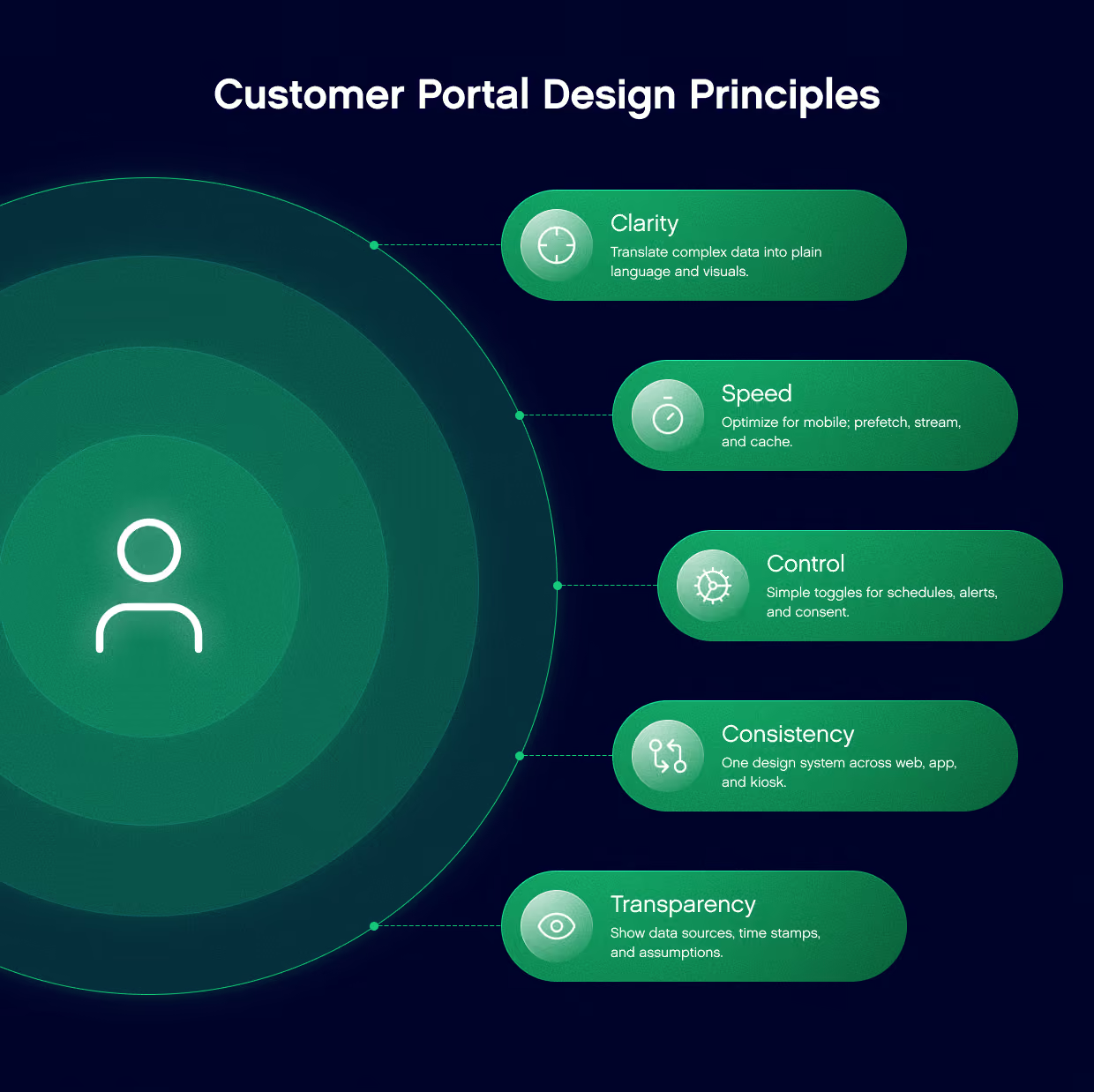
Design principles for the customer portal experience
Clarity: translate complex data into plain language and visuals.
Speed: optimize for mobile; prefetch, stream, and cache.
Control: simple toggles for schedules, alerts, and consent.
Consistency: one design system across web, app, and kiosk.
Transparency: show data sources, time stamps, and assumptions to ensure transparency.
Key features customers value
Real time monitoring of energy consumption and production.
Billing with projections and alerts.
Outage maps with ETAs.
Clean energy options: renewable energy sources, community programs, and integration of customer-owned batteries and stationary energy storage systems. For renewable energy households and C&I portfolios, show on-site renewable energy and batteries alongside purchases. Highlight renewable energy sources on bills and dashboards.
EV tools: charging schedules, off-peak nudges, and management of EV batteries as part of distributed energy resources.
Simple account management and payments customers can trust.
For electric utilities and facility managers
Electric utilities and facility managers need the same truth as customers—only deeper. Effective management and automation of facilities is crucial for improving energy efficiency and resilience, enabling real-time monitoring and control of physical infrastructure such as buildings and plants. Dashboards should include energy distribution status, alarms, and ticket queues, plus upstream energy distribution constraints that affect service windows. Asset management views track transformers, inverters, meters, and comms. Use advanced analytics on telemetry to spot anomalies and predict equipment failures before they trigger equipment failures and downtime.
Load flexibility that feels like a feature
Make load flexibility visible and valuable: show projected savings, opt-in controls, event history, and notifications. Automated adjustments should respect comfort bounds and local rules. Tie rewards to actions so customers see outcomes quickly; customers should never wonder if participation mattered. Highlight the potential financial returns and increased profitability for customers who participate in load flexibility programs, making the benefits and value of engagement clear.
Emissions tracking with context
Present emissions tracking with clear math tied to local generation mix. Let customers simulate how behavior changes affect environmental impact and long-term sustainability plans and a clear view of environmental impact trends. Roll up portfolio views for enterprises that need reporting across sites, various industries, and different operational areas or domains.
OT × IT: one team
Bridging operational technology and information technology is culture as much as code. Create joint backlogs, shared incident channels, and clear ownership. Document how changes in field devices ripple to apps and portals; notify customers when impacts are expected; treat the portal experience as the front door to operations.
Microsoft Power Platform for front-line apps
Citizen-developer extensions help close gaps fast. By automating inspections, approvals, and other workflows using Microsoft Power Platform, organizations can reduce manual effort, improve efficiency, and streamline operations. Use Microsoft Power Platform for lightweight workflows around inspections, photo capture, and approvals—wired back into the core energy management platform for governance.
Risk, compliance, and controls
Bake regulatory compliance into checklists and CI. Track consent, retention, and export flows. Map audit evidence to releases. Keep a single register of data processors and vendors. Separate sandbox from prod; restrict who can touch live devices.
Oil and gas industry lessons
The oil and gas industry has long mastered telemetry at scale. For instance, the implementation of real-time pipeline monitoring systems is a proven instance of successful telemetry and safety practice, enabling rapid detection and response to anomalies. Borrow what works: strict change control, clear runbooks, and site-aware rollouts. The gas industry’s focus on safety narratives also helps teams communicate changes to customers without confusion.
Platform choices that age well
Favor open APIs and modular boundaries. If you must choose suites, ensure adapters exist. Plan for hybrid fleets of DERs, meters, and vendor gateways. The right architecture enables utilities sector teams to swap parts without rewiring everything.
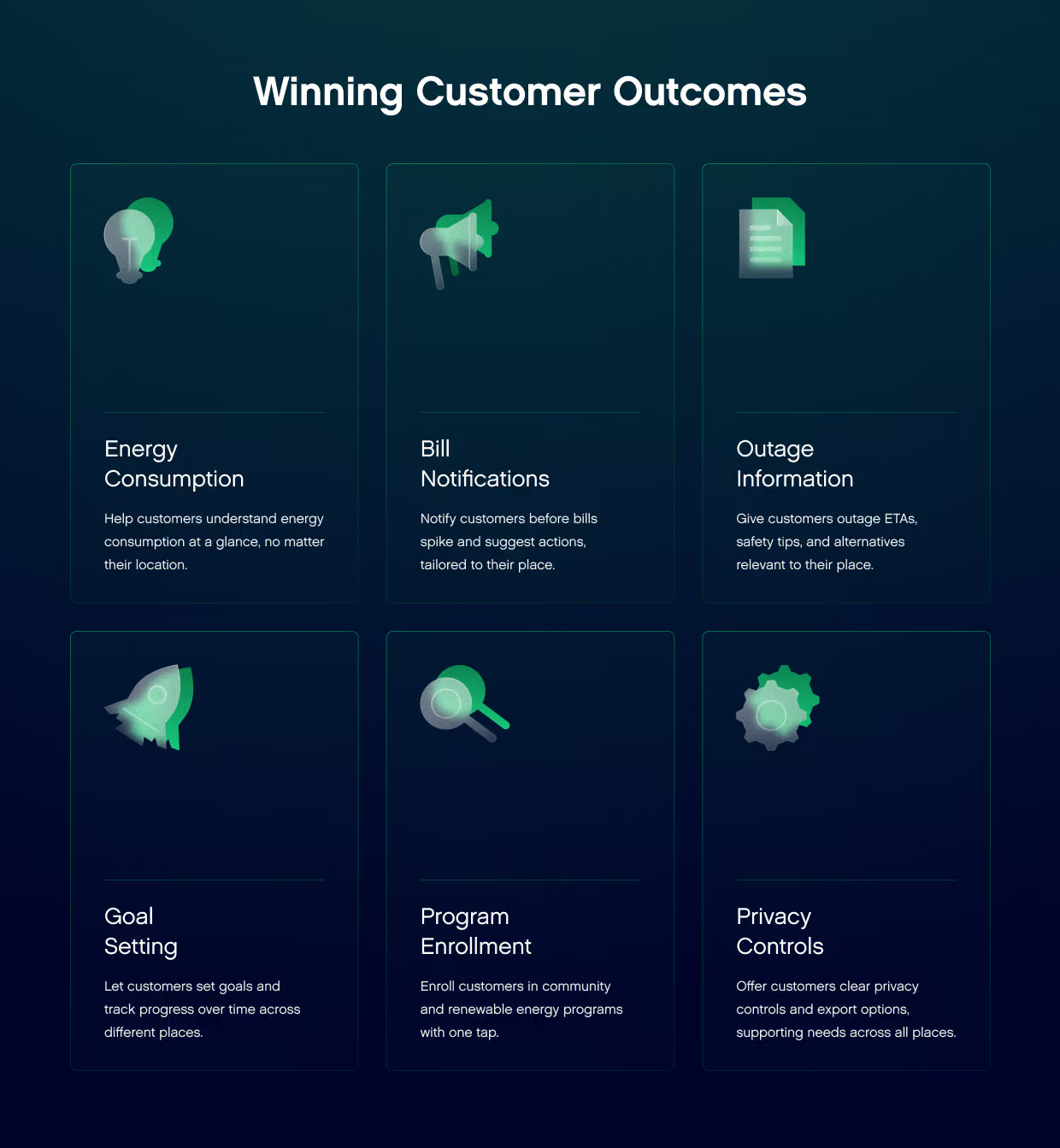
Customer outcomes to prioritize
Help customers understand energy consumption at a glance, no matter their location or place.
Let customers set goals and track progress over time across different places or geographic regions.
Notify customers before bills spike and suggest actions, tailored to their specific place or market segment.
Enroll customers in community and renewable energy programs with one tap, available in various places.
Give customers outage ETAs, safety tips, and alternatives relevant to their place or region.
Offer customers clear privacy controls and export options, supporting needs across all places.
Measuring what matters
Define a small, stable KPI set customers can recognize in every release:
Industry research and benchmarks should inform the selection of KPIs to ensure they are relevant and effective for measuring success.
Portal adoption and weekly active customers.
Time-to-resolution and first-contact success.
Enrollment in programs that improve efficiency and reduce costs.
Uptime for customer portals and API error rates.
Savings attributed to recommendations.
Launching a new portal in 90 days
Weeks 0–2 — Discovery
Stakeholder sessions, user interviews, analytics review. Align on jobs-to-be-done and risks.
Weeks 3–6 — Foundations
Design system, information architecture, and integrations. Begin development of core features, including auth, localization, and observability.
Weeks 7–10 — Core build
Continue development with usage dashboards, billing, support, outage, and program enrollment. Wire alerts and real time monitoring.
Weeks 11–12 — Hardening & go-live
Content freeze, load tests, runbooks, and staged rollout. Announce new features inside the new portal with tips. Tease upcoming new features in release notes to drive return visits.
Playbooks that travel
Package what works as playbooks customers can reuse: outage comms, high-bill coaching, DER onboarding, community solar, highlighting key strategies and best practices that drive success. Reuse across business units and countries.
What software do energy companies use?
There’s no single answer. Reliable internet connectivity is crucial for IoT platforms and cloud-based energy management solutions, enabling real-time data transmission and seamless device interconnectivity. Common patterns include cloud based solutions for ingestion, an energy management platform for device control, customer portals for self-service, and analytics for journey measurement. Suites from Schneider Electric and Siemens MindSphere remain strong; Honeywell Forge is common in industrial contexts.
AI applications with a purpose
Keep AI use cases focused: anomaly detection, forecasting, triage. Use artificial intelligence to help teams choose, not to replace judgment. Provide clear opt-outs and explanations when automated decisions touch customers.
Advanced analytics without lock-in
Avoid black boxes. Prefer open data models and export paths. Use cloud infrastructure to scale storage and compute. Start simple, then expand as you learn which questions deliver the most value.
Governance that survives growth
Version APIs, components, and contracts. Establish change windows. Review breaking changes in a cross-functional forum. Publish a living roadmap so customers and partners can plan, and invite customers to preview programs.
Decision making in the digital energy era
In today’s digital energy era, decision-making is driven by data integrity and real time insights. Utilities and operators are harnessing IoT devices, AI, and blockchain to collect and analyze vast amounts of data from smart meters, sensors, and customer interactions. This data powers smarter operations—enabling companies to optimize energy production, reduce costs, and improve service reliability.
Cloud based solutions and open platforms are transforming how stakeholders collaborate, making it easier for utilities, grid operators, and customers to access and share information securely. By prioritizing data integrity and robust security measures, energy companies can ensure that their operations are both efficient and trustworthy. This collaborative, data-driven approach not only reduces operational costs but also empowers stakeholders to make informed decisions that benefit the entire energy ecosystem.
Case study example (anonymized)
A regional utility’s senior manager led a cross-functional team in a successful portal launch project, delivering localization for six markets, role-based access, and device-level real time insights. Result: lower call volumes, faster enrollments, and higher program participation. Schneider Electric gateways fed telemetry; Microsoft’s cloud handled ingestion and APIs; Google Analytics captured journey friction; the energy management platform unified assets and alerts.
What’s next: new technologies and patterns
Expect deeper DER orchestration, tighter EV integration, and richer portal experience patterns. The energy sector has experienced significant growth in digital transformation and the adoption of new technologies, accelerating the pace of change. As the energy transition accelerates, energy companies that lean into digital transformation across the energy sector will pull ahead, experiences that are reliable, explainable, and fast will win, driving innovation in how utilities serve people.
Get a DX Readiness Review (security • scale • workflows)
We’ll audit your customer portals, energy management platform, and integrations against best practices for security, scale, and workflows. You’ll get a prioritized roadmap you can act on now—plus a blueprint for the next 90 days.
The future of the energy and utilities sector will be defined by digital transformation, sustainability, and a relentless focus on innovation. Companies that commit to this journey—leveraging machine learning, automation, and cloud services—will be best positioned to deliver exceptional customer experiences and optimize their operations. A clear commitment to sustainability and digital technologies enables organizations to reduce emissions, improve grid reliability, and unlock new value for stakeholders.
To thrive in this evolving landscape, energy enterprises must prioritize collaboration, invest in future-ready infrastructure, and embrace automation at every level. By doing so, they can deliver on the promise of a more sustainable, efficient, and customer-centric energy future—one where digital transformation is not just a goal, but the operational backbone that powers ongoing growth and resilience.
FAQ
What is energy digitalization?
Digitizing field and back-office processes end-to-end—devices, data, workflows, and service—so utilities can operate efficiently and customers can self-serve.
What is digital energy management?
Using software to monitor, control, and optimize energy use across homes, buildings, and fleets via an energy management platform and connected devices.
What is the digital transformation of the energy industry?
A shift from asset-only thinking to platforms, customer portals, and services that connect operations to outcomes.
How do I evaluate if an energy digital platform/vendor is reliable?
Evaluate vendor claims against real outcomes and independent audits. Prioritize platforms with clear SLAs, exportable data, and third-party security attestations.
What types of software are used in energy management platforms?
Combinations of cloud based solutions, customer portals, analytics, and vendor suites (e.g., Schneider Electric, Honeywell Forge, Siemens MindSphere) wired into the core platform. Many leading vendors have significant operations and implementations in France, supporting both local and international energy management needs.
Related Posts
More from the team on what's shifting and what to do about it.