Energy Brand Strategy: The Evolution of Power and Why Companies Need Digital Maturity Now
It is a fact that the liberalization of the energy market has empowered consumers with more choices, making branding more critical than ever for energy companies.
Energy brand strategy is how you compete beyond price: clear positioning, credible proof, and consistent digital execution across web, product, and portals.
Energy branding is a specialized discipline that gives energy sector companies a competitive advantage, helping them differentiate, retain customers, and adapt to changing market demands.
An energy company that shows authentic sustainability (not greenwash) and measurable outcomes can become a branded leader by rebranding for sustainability, earning trust with investors and enterprise buyers.
Technology (smart meters, portals, AI) helps, but the story must be human-centered and operationalized in design systems and governance.
Strategic segmentation, renewables brand positioning, and a credible transition narrative win the mid-market and enterprise.
Mature brands reduce churn, shorten sales cycles, and improve marketing ROI—that’s investor-ready branding in practice.
Energy branding must effectively communicate a company's commitment to reducing environmental impact and sustainability, which is increasingly important to both consumers and stakeholders.
It is a fact that the liberalization of the energy market has empowered consumers with more choices, making branding more critical than ever for energy companies.
Introduction to the Energy Sector
The energy sector is undergoing a profound transformation, driven by rapid technological advancements, evolving regulations, and shifting customer expectations. No longer defined solely by infrastructure and commodity pricing, today’s energy companies must navigate a landscape where digital experiences, sustainability, and brand perception play a central role. As new technologies like smart grids, AI-driven analytics, and renewable energy sources such as wind and solar become mainstream, the ability to adapt and innovate is more important than ever.
Companies that understand these changes and invest in digital tools, brand strategy, and customer-centric services are better positioned to reach their target audiences, increase operational efficiency, and distinguish themselves from competitors. Communicating complex technical information simply is critical in energy branding, as it ensures that the benefits of these innovations are accessible to a broader audience. In this new era, energy brands must be agile, informed, and proactive to remain relevant and drive growth.
Why This Matters Now
The energy sector has shifted from infrastructure-only to brand-led, digital-first competition. In the present landscape, consumers have more choice than ever, able to select their energy suppliers, utilize microgrids, and adopt local energy production methods.
Whether you’re an IPP, developer, EPC, utility, or energy SaaS, the buyers you want—procurement, risk, and ops leaders—expect both a story and the systems to back it up. Helping customers make sense of complex energy options through clear branding is essential. Storytelling connects energy brands to customers on an emotional level, making them more relatable and memorable. Connecting with buyers on both emotional and rational levels is key to building loyalty and trust.
That’s the job of an energy brand strategy, but effective positioning is not simple, especially in today’s market with new entrants and evolving technology. Understanding and addressing your target audience is critical in all branding efforts.
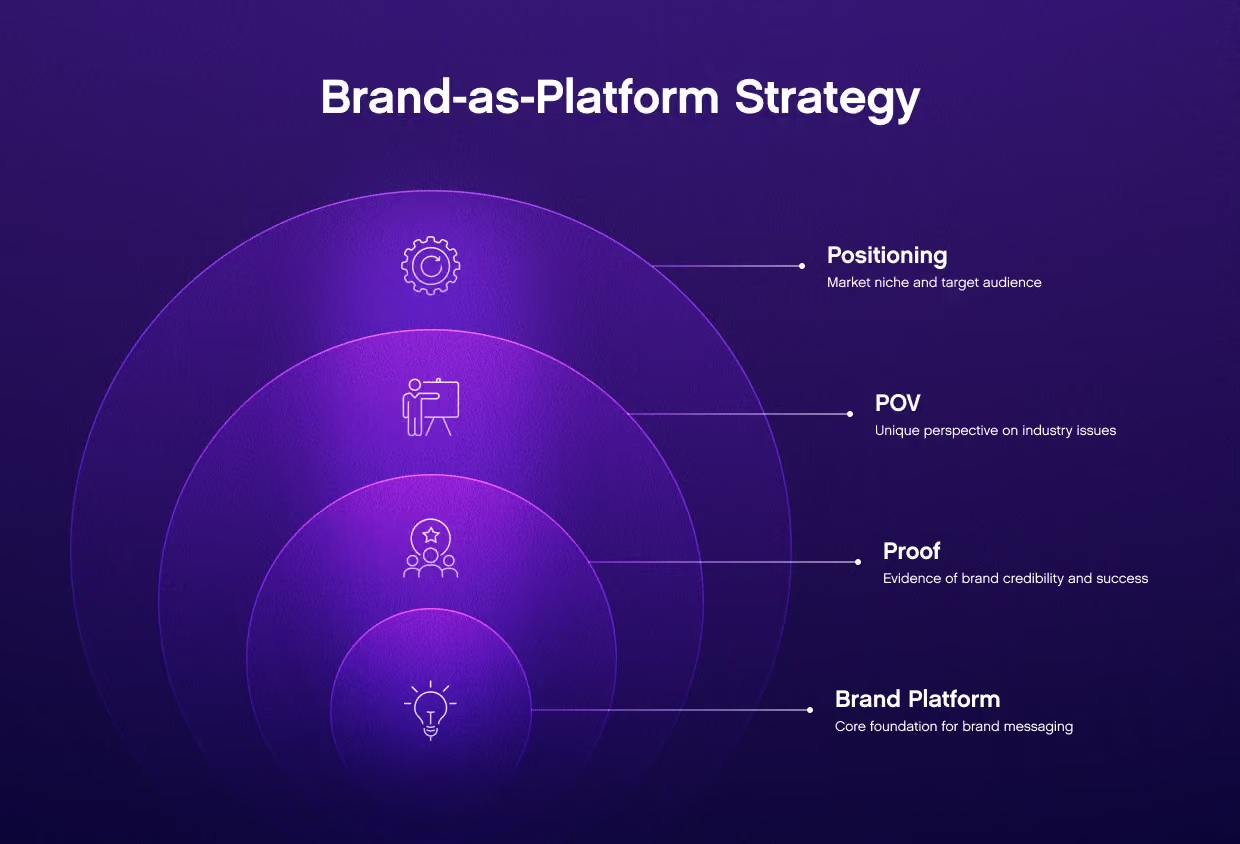
Brand-as-platform: Positioning → POV → Proof
Your brand is not a logo; it’s the platform that aligns narrative, offers, and digital surfaces in the right way to deliver your brand message effectively.
POV: a crisp stance on the energy transition, risk, and outcomes (cost, reliability, emissions), highlighting key benefits and features that set your brand apart.
Proof: customer logos, quantified results, security & compliance, third-party validation, highlighting the most impactful achievements and attributes.
There are many ways brands can communicate their value proposition—by highlighting innovation, simplifying technical information, and engaging stakeholders through multiple channels.
Building a strong brand platform requires deep knowledge of the energy sector and market dynamics to ensure your positioning resonates and drives results. Integrating chosen keywords strategically in your brand playbook helps to amplify your digital presence for the long term, ensuring that your messaging reaches the right audience effectively.
Focused brand strategy for specific market segments
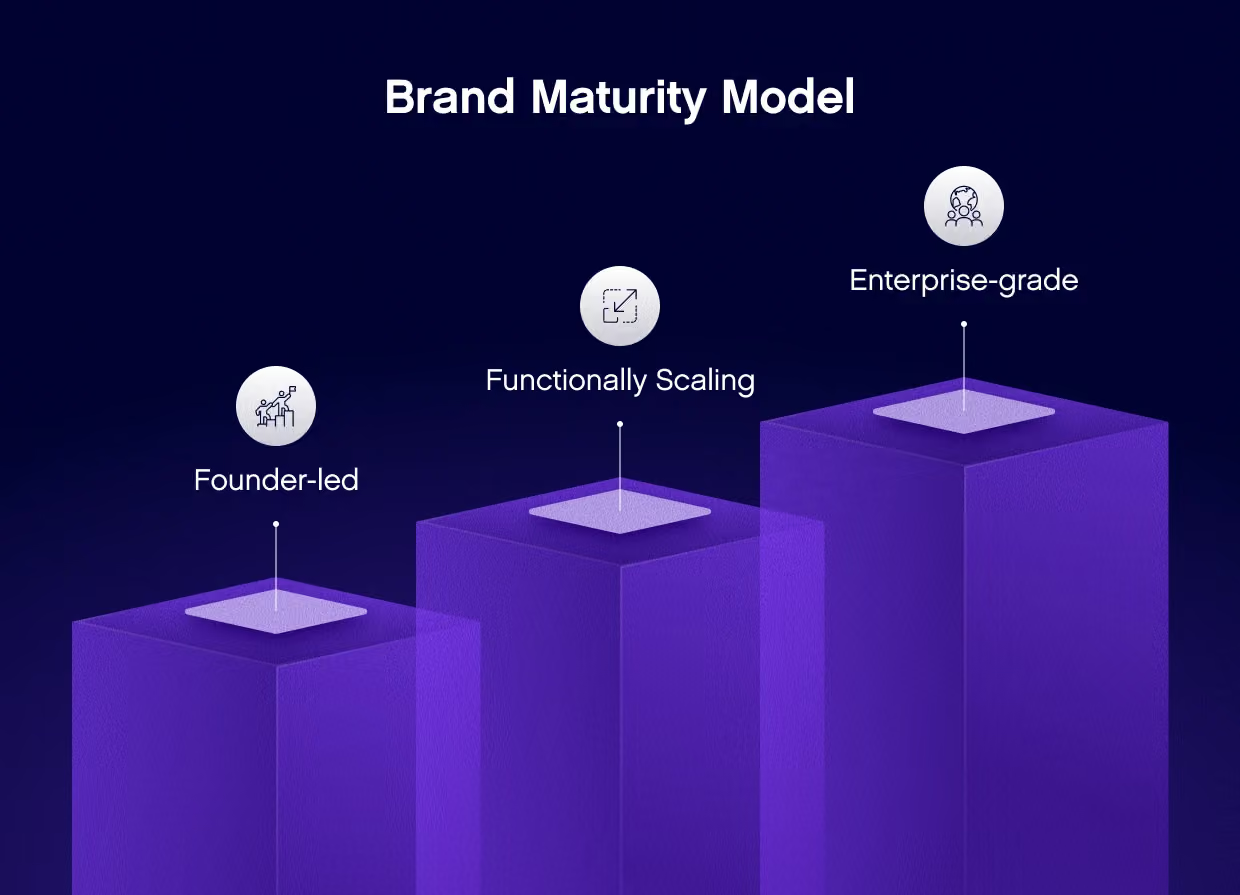
Informative content that clearly communicates your value proposition and integrates data-driven insights is essential for demonstrating brand maturity. Research plays a critical role in identifying gaps and opportunities within the brand maturity model, ensuring your approach is both strategic and evidence-based. Engaging participants throughout the process of developing and scaling brand maturity helps ensure alignment and buy-in across your organization.
Strategic Vision and Leadership
In a rapidly changing energy sector, strategic vision and strong leadership are essential for success. The most impactful energy companies are those led by experts who not only understand the complexities of the market but also anticipate future trends and proactively shape their organizations to meet new challenges. Effective leaders set a clear vision that aligns teams, guides investment in innovative technologies, and ensures that brand and digital maturity are prioritized at every level. By fostering a culture of collaboration and continuous improvement, these leaders empower their teams to deliver valuable insights, craft compelling narratives, and build lasting relationships with customers and partners. Ultimately, it is this combination of expertise, foresight, and proactive leadership that enables energy companies to stay ahead of the curve, drive meaningful change, and achieve sustainable growth.
Metrics: cycle time, win rate, fleet size, uptime, CWV
Risk & security: data protection, SLAs, compliance
Operations: governance, reliability, support model, maintaining key assets while pursuing new opportunities
Roadmap: near-term deliverables with proof cadence
Existing customers: demonstrating retention and loyalty among existing customers to show stability and long-term value
This is investor-ready branding: the same facts, consistently expressed across web, decks, and portals.
Asking the right questions is essential when developing an investor-ready brand narrative to ensure all strategic challenges and opportunities are addressed.
Naming & Narrative That Track GTM
Map naming to offers and ICP jobs-to-be-done (developer, facility, utility), while also considering the perspectives of the people—both customers and employees—who will engage with your brand.
Mirror buyer language (PPA, DER, interconnection, demand response).
Reflect your company's home region or state in your naming and narrative to build local relevance and trust.
Keep one layer of renewables brand positioning for sustainability officers; another for finance and ops.
Collaborate with a partner, such as a branding or compliance expert, to refine your naming and narrative strategies for maximum impact.
Web & DX As The Proof Point
Your site and portal are where the brand either holds or breaks. Treat DX (digital experience) as infrastructure:
If you're interested in seeing how branded digital experiences can elevate your business, explore our case studies or get in touch to learn more.
Metrics That Matter (Brand × Revenue)
Enterprise win rate / sales cycle time
% pages passing CWV; accessibility pass rate
enterprise references added per quarter
Portal adoption / NPS / support tickets per 1k users
Organic rankings for energy brand strategy and adjacent terms
Tracking the impact of energy branding on key performance indicators
When evaluating these brand metrics, it's important to keep long-term objectives and future sustainability in mind.
Opportunities in the Renewable Energy Sector
The renewable energy sector presents a wealth of opportunities for forward-thinking energy companies. As demand for wind, solar, and other sustainable solutions continues to rise, companies that embrace innovative technologies and focus on authentic sustainability can significantly increase their reach and impact. By leveraging digital tools and data-driven insights, energy brands can craft targeted offerings, improve customer experiences, and demonstrate measurable environmental impact. Community engagement programs that address local needs help build local support and humanize the brand beyond its commercial operations. Strategic brand positioning in renewables not only attracts environmentally conscious audiences but also supports regulatory compliance and cost savings.
Companies that invest in storytelling, content, and digital platforms are better equipped to connect with new markets, establish themselves as leaders in sustainability, and differentiate their products and services from competitors. In this dynamic landscape, the ability to adapt, collaborate, and maintain a clear focus on growth and environmental responsibility is key to long-term success.
Anti-Greenwash: Credibility Checklist
Third-party verification (RECs, LCA, audits)
Specific numbers (MW installed, tCO₂e avoided)
Clear boundaries (what’s covered, what isn’t)
Independent customer quotes and logos (with permission)
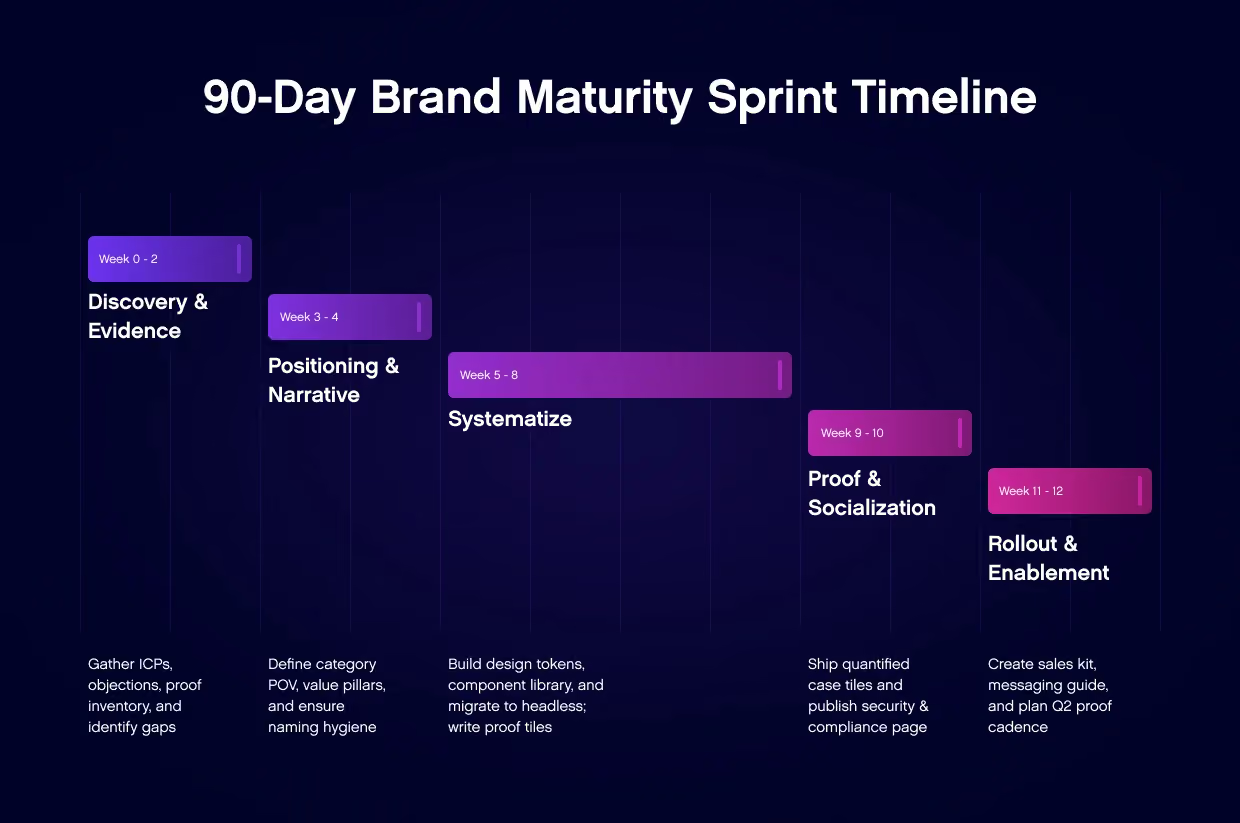
90-day Brand Maturity Sprint
Weeks 0–2 — Discovery & evidence
ICPs, objections, proof inventory, gaps.
Weeks 3–4 — Positioning & narrative
Category POV, value pillars, naming hygiene.
Weeks 5–8 — Systematize
Design tokens, component library, web patterns; migrate to headless; write 6–8 “proof tiles”.
Weeks 9–10 — Proof & socialization
Ship 3 quantified case tiles; publish security & compliance page.
Weeks 11–12 — Rollout & enablement
Sales kit, messaging guide, release notes; plan Q2 proof cadence.
Conclusion and Future Outlook for Energy Brands
As the energy sector continues to evolve, the importance of brand and digital maturity will only increase. Companies that invest in strategic vision, innovative technologies, and authentic sustainability will be best positioned to thrive in a competitive market. The future belongs to energy brands that embrace change, leverage valuable insights, and maintain a relentless focus on customer needs and environmental impact. By collaborating with expert partners, adopting best-in-class digital tools, and crafting compelling narratives, energy companies can build strong relationships, drive growth, and set new standards for the industry. The path forward is clear: those who prioritize brand and digital excellence today will shape the future of energy for years to come.
Energy brand strategy results typically emerge in phases over 12-24 months. Initial awareness and perception changes can be measured within 3-6 months of campaign launch, while customer acquisition and retention improvements usually become evident after 6-12 months. The most significant financial impacts, including pricing premiums and reduced churn rates, generally require 18-24 months of consistent brand implementation to fully materialize.
Digital channels including search engine marketing, social media advertising, and email campaigns provide the best targeting and measurement capabilities for residential energy marketing. However, traditional channels like direct mail and local media remain important for reaching certain demographic segments. The most effective approach combines digital efficiency with traditional trust-building through community presence and local partnerships.
Corporate social responsibility significantly influences energy brand perception, particularly among environmentally conscious customers. Authentic CSR initiatives including renewable energy investments, community programs, and environmental stewardship create positive brand associations that increase customer loyalty. However, customers are increasingly sophisticated about identifying genuine commitment versus superficial marketing efforts.
Energy companies measure brand strategy ROI through customer lifetime value analysis, pricing premium tracking, and churn rate comparisons. Strong brands typically achieve 15-25% higher customer retention rates and can command 5-10% pricing premiums compared to commodity-positioned competitors. These improvements often generate ROI that exceeds traditional price-based marketing while building sustainable competitive advantages.
Related Posts
More from the team on what's shifting and what to do about it.